History ///
Founded in 1968 by poet and editor George Drury Smith as an experimental literary magazine, Beyond Baroque has served as a center for poetry, literary culture, artistic experimentation, and community building for more than 50 years.
The Early Years
George Drury Smith had conceived of an experimental magazine called Beyond Baroque several years prior to its launch in 1968, and early on prepared a title page and editorial introduction to his vision. He later described his name for the nascent magazine and organization as signaling his desire for a literature that looked forward, that carried an intent to go beyond established forms and into the future.
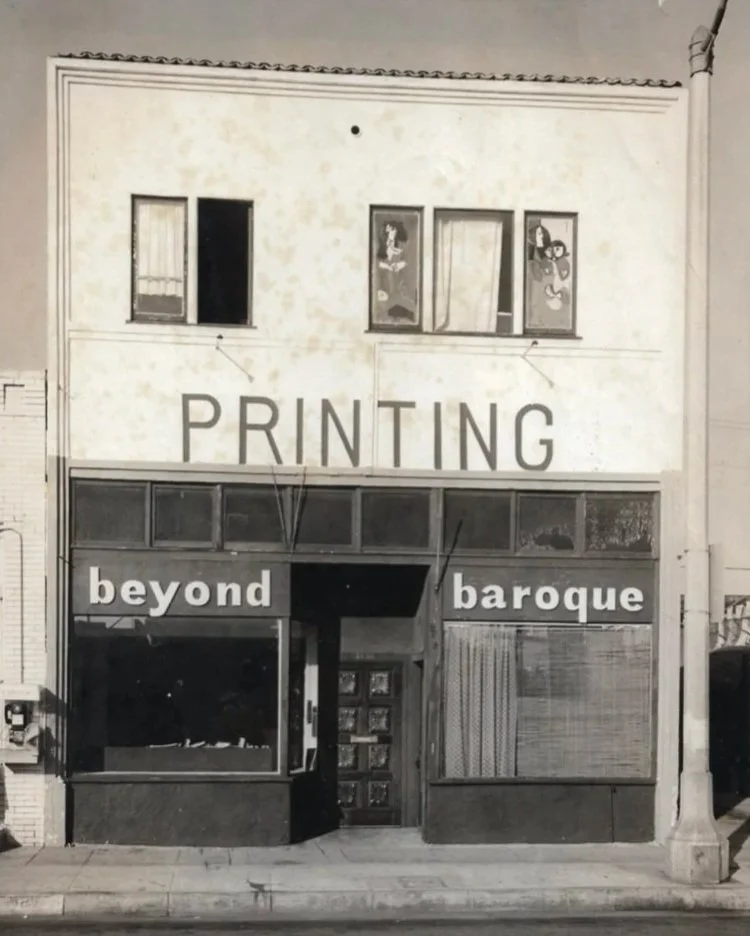
The magazine was initially based in Venice, California, on West Washington Boulevard (now Abbott Kinney Boulevard). Although Beyond Baroque began as a print project, the space quickly became a gathering place. Smith opened the front room to the public on Thursday evenings for events known as “Happenstance,” and poets soon began using Wednesday nights informally for readings and discussion.
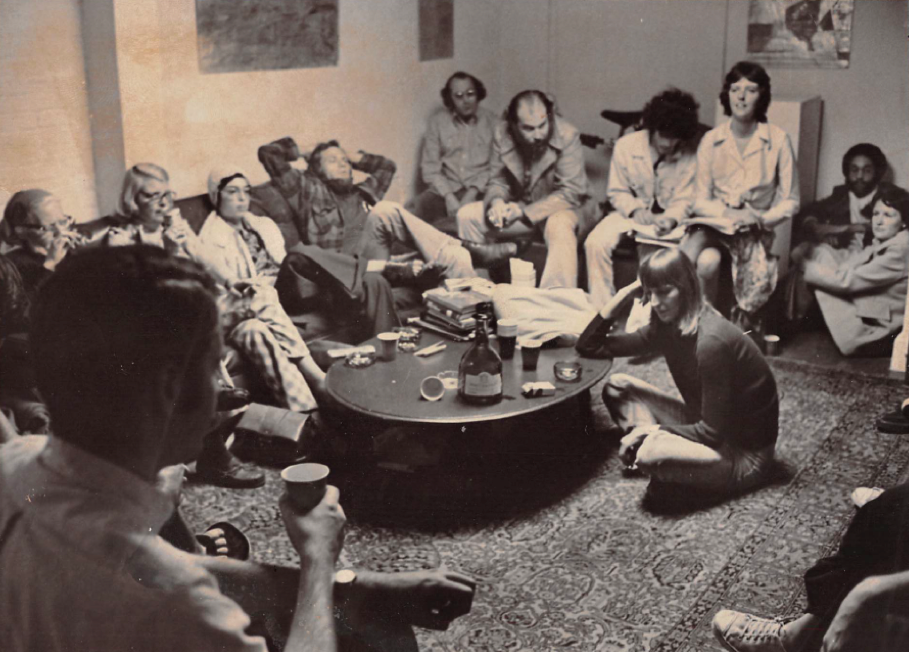
In 1969, poets Joseph Hansen and John Harris brought an already-established poetry workshop to the space. That workshop became the Wednesday Night Poetry Workshop, which has been held weekly and continuously since that time. Over the following years, the workshop became a central feature of Beyond Baroque’s identity and a sustained forum for poets working across styles, generations, and traditions. “Beyond Baroque was my alma mater,” workshop alumna Wanda Coleman said. “The poets I met there were my classmates.”
Expanding in the 1970s
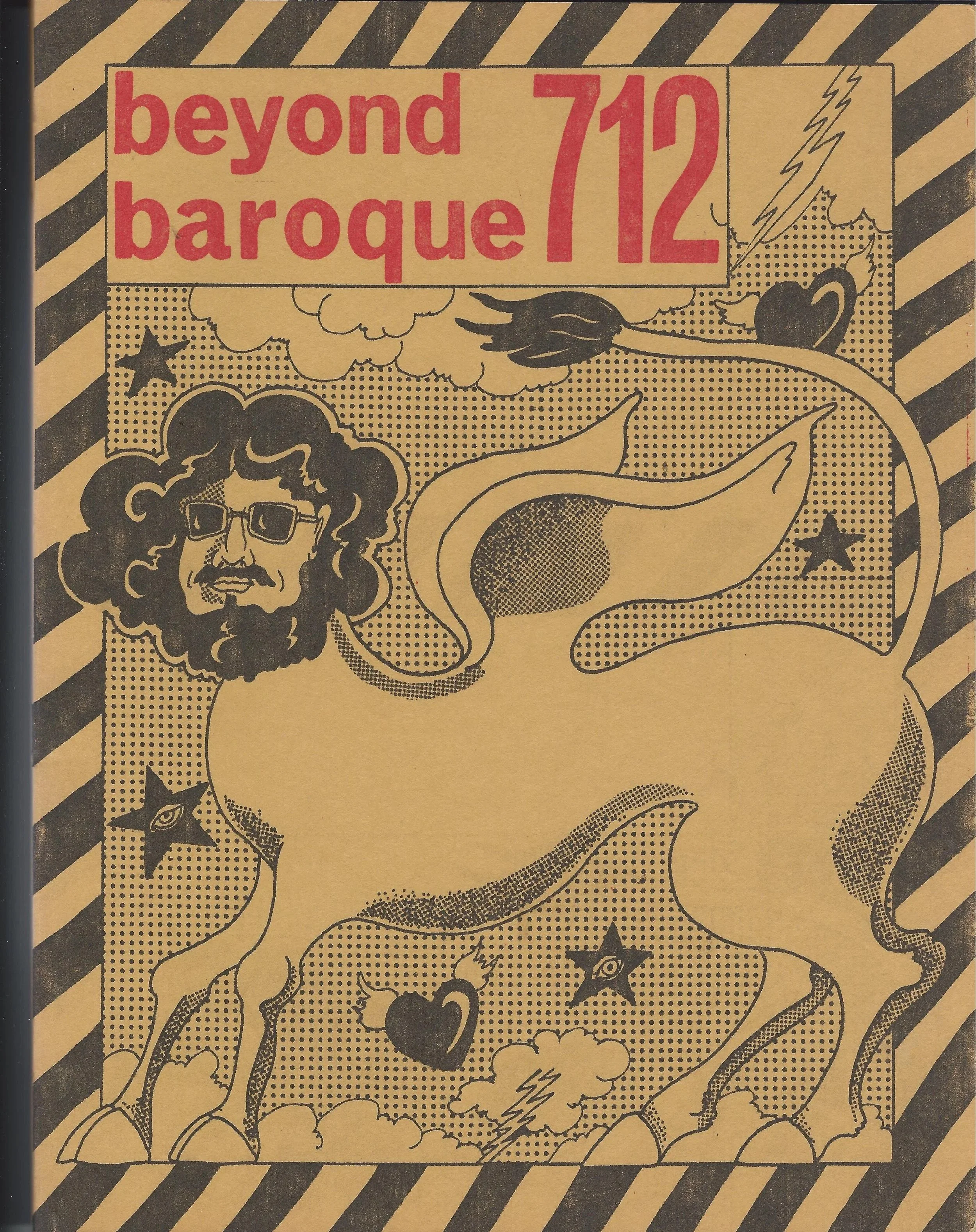
During the early 1970s, Beyond Baroque expanded both its programming and its publishing activity. Artistic director Jim Krusoe was a central figure in shaping Beyond Baroque’s literary output during this period. A founding generation of poets that included Harry Northup, Bill Mohr, Wanda Coleman, and many others cut their teeth in the workshops of this era. A small literary news pamphlet developed into NewLetterS, which later became NEW magazine, reaching a wide national circulation by the mid-1970s. Alongside literary activity, Beyond Baroque presented musical performances and art exhibitions, including classical chamber music and experimental and avant-garde work.
Beyond Baroque became an official nonprofit organization in 1972 and received its first National Endowment for the Arts grant in 1973. As audiences grew throughout the decade, programming expanded beyond the original front room. In 1975, the back space at the Washington Boulevard location was opened and converted into a combined library and performance room, with Alexandra Garrett serving as the first librarian. The library would later evolve into the Beyond Baroque bookstore. During this period, musicians John Doe and Exene Cervenka, who was an employee of Beyond Baroque, met through the Wednesday Night Poetry Workshop, and as a result co-founded the band X.
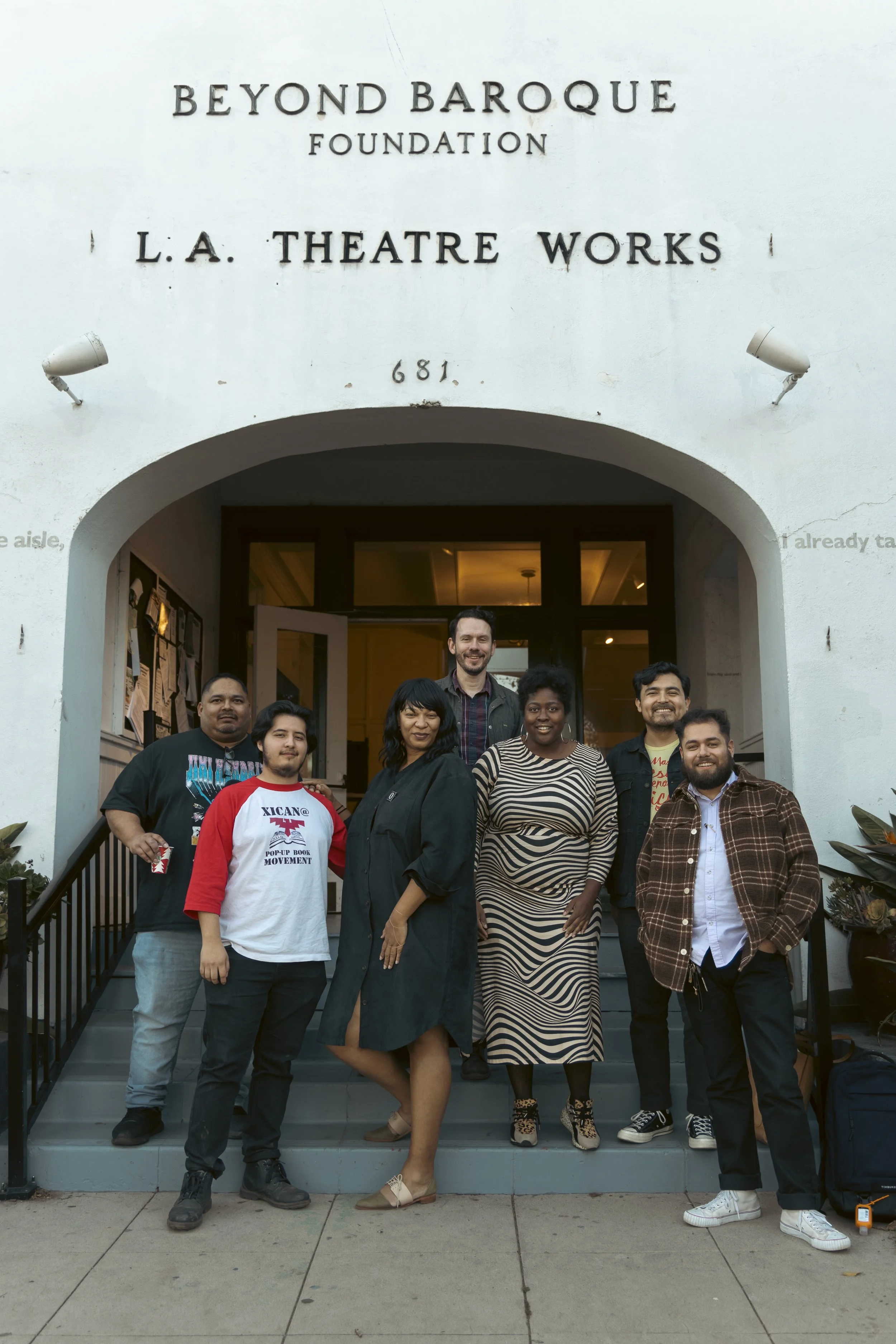
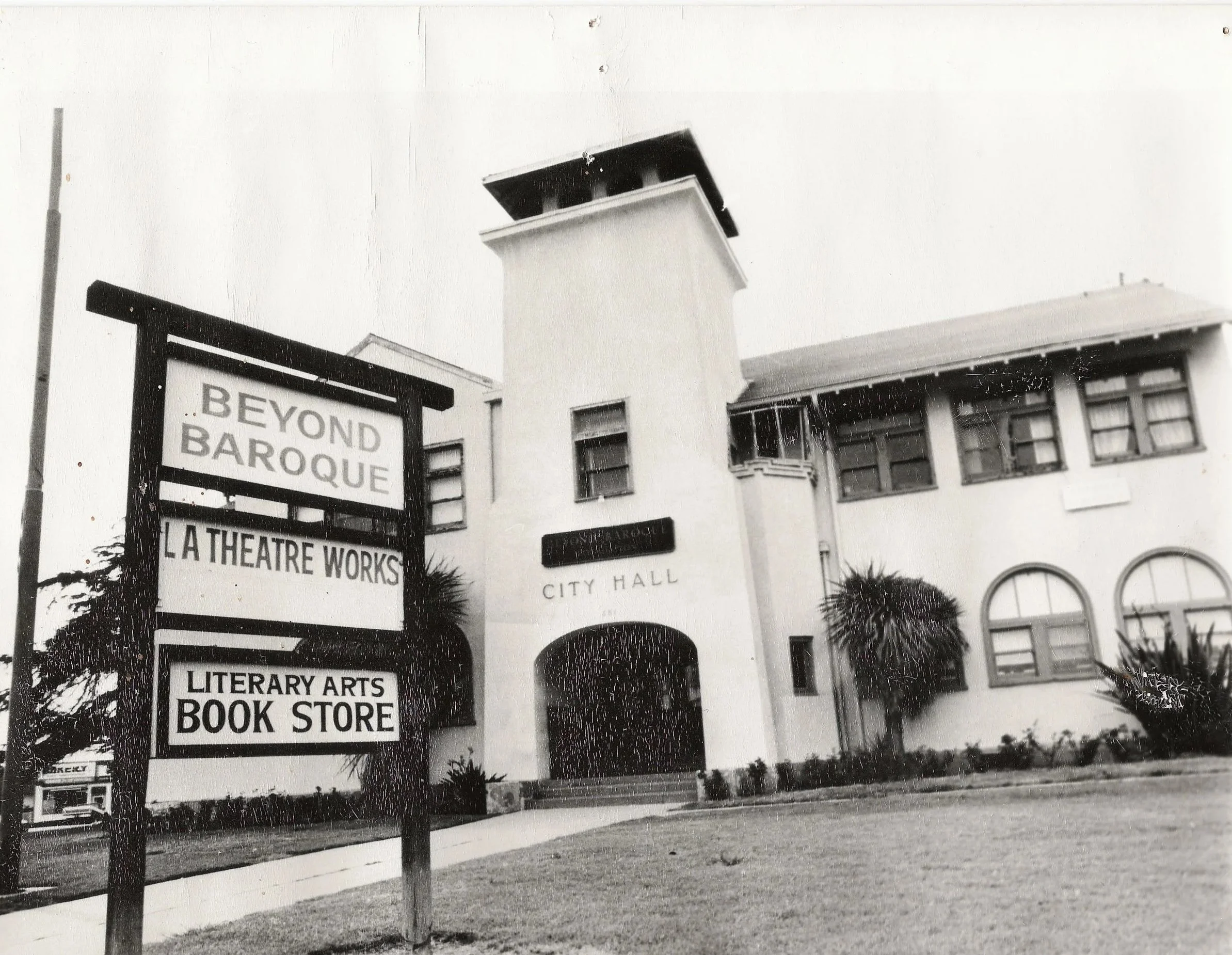
By the late 1970s, the scale of Beyond Baroque’s programming and audiences made clear the need for a larger, unified space. In 1979, Beyond Baroque relocated to the former Venice City Hall building at 681 Venice Boulevard, where it remains today. The building, which had not served as city hall since Venice was annexed by Los Angeles in the 1920s, became a permanent home for Beyond Baroque’s public programs.
Continuing into the 1980s
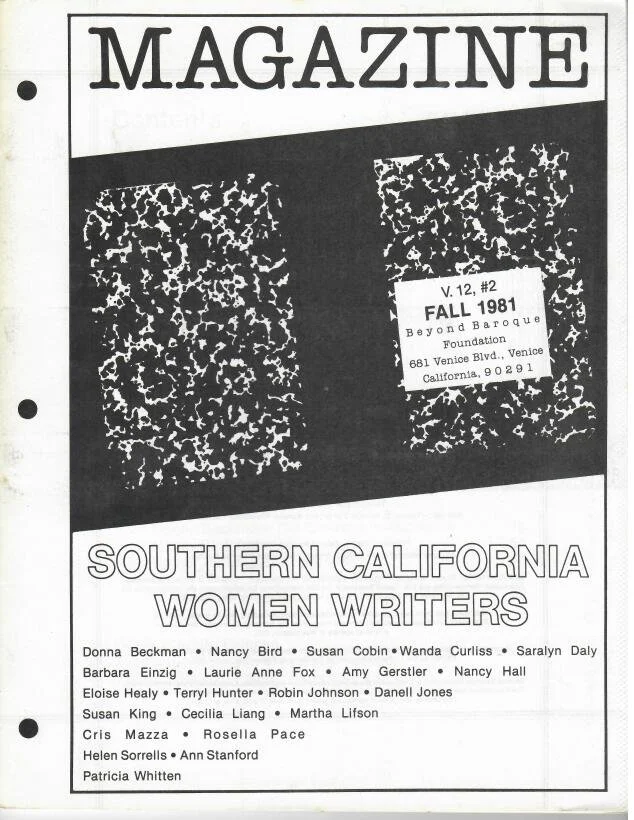
Throughout the late 1970s and 1980s, Beyond Baroque functioned as a place where poetry, publishing, and performance intersected. The organization maintained printing and graphics facilities used by both staff and members of the broader literary community. Poets could develop work through the Wednesday workshop, read publicly, prepare work for publication, and see it circulated through the bookstore and Beyond Baroque’s publications. A generation of writers gathered around the Center’s artistic director Dennis Cooper during this time, including Bob Flanagan, Amy Gerstler, Jack Skelley, the artist Mike Kelley, and many others working across literary forms. Beyond Baroque also served as a forum for interdisciplinary, experimental, and politically engaged programming, and as a frequent venue for punk shows.
Evolving into a New Millennium
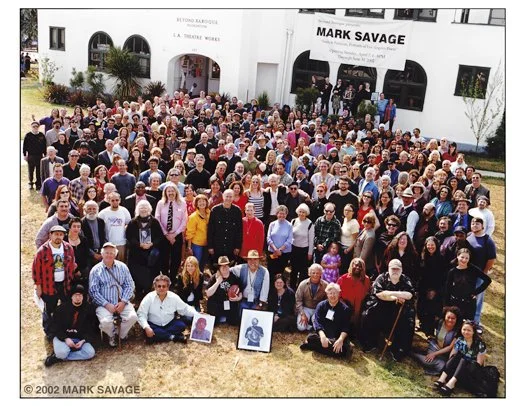
In the 1990s and 2000s, Beyond Baroque expanded its publishing and curatorial initiatives. In 1998, the organization established its publishing imprint, Beyond Baroque Books. In 2000, the Venice Beach Poets’ Memorial was curated on the Venice Beach boardwalk, commemorating poets with ties to the local literary community.
In 2009, Beyond Baroque secured a long-term agreement with the City of Los Angeles ensuring continued occupancy of the Venice City Hall building. The agreement affirmed the organization’s role as a permanent cultural institution within the city.
50 Years & Beyond
In the 2010s, Beyond Baroque formally established the Mike Kelley Gallery, launched the Pacific Coast Poetry Series imprint of Beyond Baroque Books, and established its annual Awards Dinner to honor the wider literary community. In 2018, the Center celebrated its 50th anniversary with a year-long series of programs culminating in a public celebration honoring Beyond Baroque alumni and longtime friend Viggo Mortensen, Poet-in-Residence Will Alexander, and founder George Drury Smith.
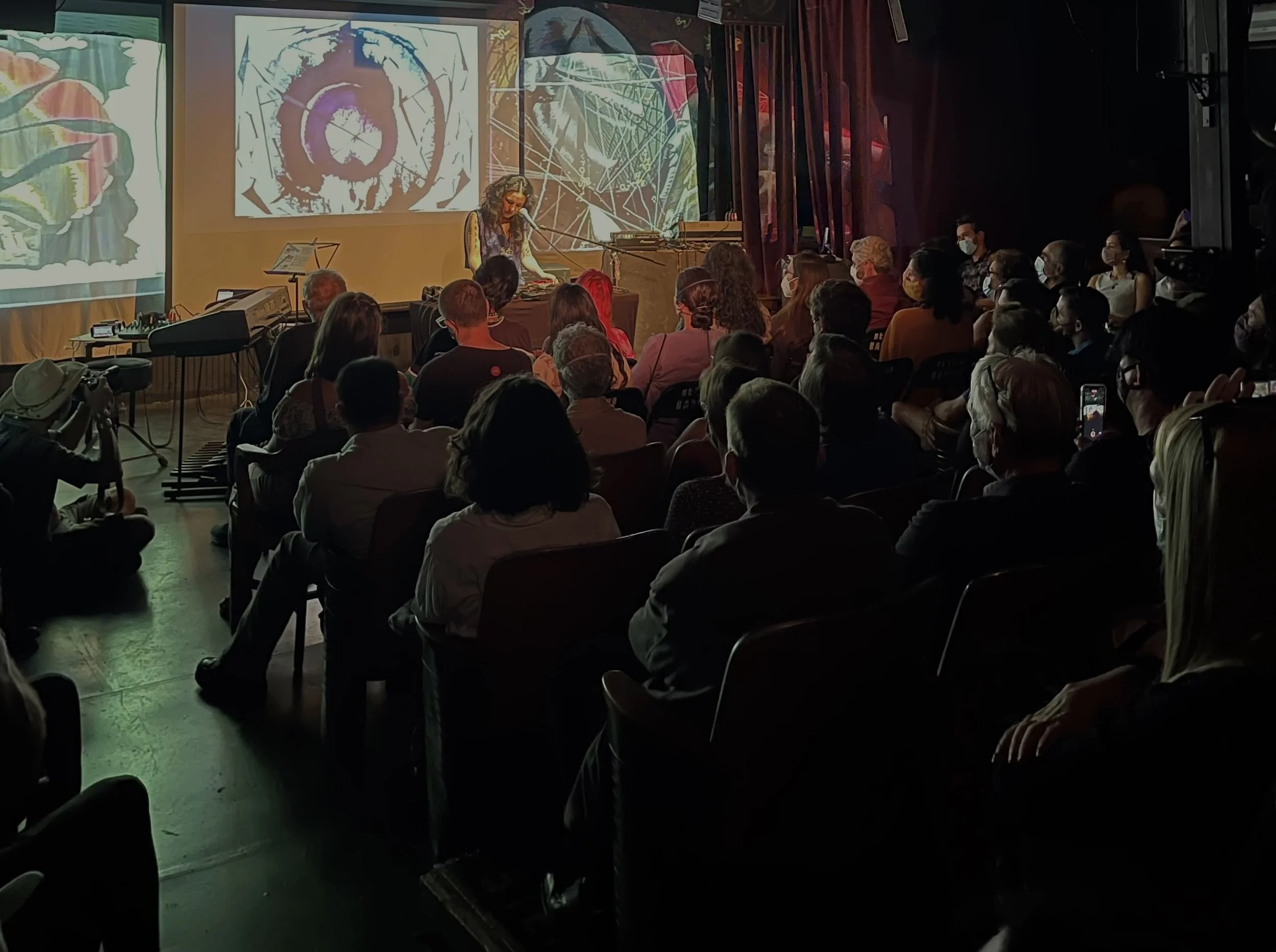
That same year, the Southern California Poetry Festival was established at Beyond Baroque, and in 2022 the organization launched the International Poetry Film Festival, Los Angeles. Following the COVID-19 pandemic, Beyond Baroque reopened with a renovated theater, redesigned Poets’ Garden, and an expanded slate of programs, workshops, festivals, fellowships, and public gatherings. It continued to nurture new writers while honoring its literary history, renaming its theater after Wanda Coleman in 2023 and establishing the Linda J. Albertano Poetry Fellowship in 2024.
What began in 1968 as a literary magazine is now a permanent, intergenerational center for poets, writers, performers, and artists to experiment, learn, publish, and form community in Los Angeles.